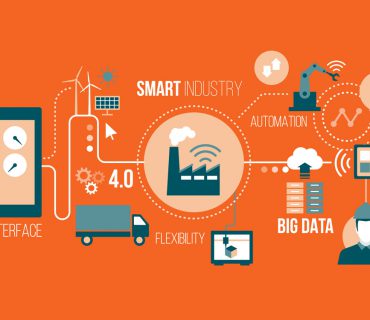
Industry 4.0 — and the Rise of Industry 5.0
Industry 4.0 is the digital transformation of manufacturing — connecting physical operations with cyber-physical systems, IIoT sensors, AI, cloud computing, and advanced robotics to create smart, self-optimising factories. While Industry 4.0 focused on automation and data exchange, the emerging Industry 5.0 paradigm adds a critical dimension: collaboration between humans and machines, with a focus on sustainability, resilience, and human-centric production.
Organisations that have implemented Industry 4.0 technologies report productivity improvements of 25–30%, quality defect reductions of up to 40%, and significant gains in energy efficiency. Those leading the transition are now building toward the Industry 5.0 vision — where AI and robotics augment human workers rather than simply replace them.
What Sigillieum Offers
Sigillieum helps manufacturers and industrial operators navigate the full journey from legacy systems to intelligent, connected factories. We combine deep expertise in IIoT, AI, digital twins, and cloud infrastructure to deliver measurable operational improvements.
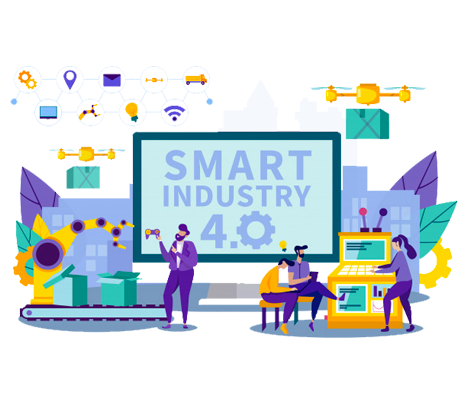
Latest Trends in Industry 4.0
AI-Driven Manufacturing
Machine learning models now optimise production schedules, predict equipment failure, control process parameters in real time, and detect quality defects with superhuman accuracy. AI is moving from pilot projects to core production infrastructure across automotive, electronics, and process industries.
Digital Twins of the Factory
Factory-wide digital twins — built from IIoT sensor data, CAD models, and process data — enable engineers to simulate changes, optimise layouts, and identify bottlenecks before making costly physical modifications. Real-time synchronisation makes the twin a live operational dashboard.
Collaborative Robots (Cobots)
Unlike traditional industrial robots locked behind safety cages, cobots are designed to work alongside human operators — handling repetitive, heavy, or precision tasks while humans focus on judgment and dexterity. Cobot deployments are growing rapidly as prices fall and programming becomes no-code.
Autonomous Mobile Robots (AMRs)
AMRs navigate dynamic factory floors without fixed tracks, autonomously moving materials, feeding production lines, and conducting inventory counts. Unlike AGVs, they adapt to obstacles in real time using LiDAR, cameras, and AI navigation — transforming warehouse and intralogistics operations.
Sustainable & Circular Manufacturing
Industry 5.0 puts sustainability at the centre of manufacturing strategy. IoT-monitored energy consumption, AI-optimised material usage, closed-loop recycling systems, and carbon tracking tools are becoming competitive differentiators as ESG reporting requirements intensify globally.
5G Private Networks on the Shop Floor
Private 5G networks in factories deliver the ultra-low latency, high reliability, and massive device density that Wi-Fi cannot match — enabling real-time control of robotic systems, high-definition video quality inspection, and seamless AGV/AMR coordination across large facilities.