IoT — The Nervous System of the Intelligent World
The Internet of Things connects the physical and digital worlds — embedding intelligence into machines, buildings, vehicles, and infrastructure. With over 16 billion connected devices active today and that number growing rapidly, IoT generates the real-world data that feeds AI, enables predictive operations, and creates entirely new business models. The convergence of IoT with AI (AIoT), 5G, edge computing, and digital twins has moved IoT from a monitoring technology to a fully autonomous decision-making layer.
What Sigillieum Offers
End-to-end IoT services from strategy through deployment and ongoing intelligence

IoT Strategy & Architecture
We help you define the right IoT architecture — device selection, connectivity protocols (MQTT, Matter, LoRaWAN, 5G), cloud backend, and security model — tailored to your industry and scale.
AIoT — Intelligence at the Edge
We combine IoT sensor data with machine learning models deployed at the edge — enabling real-time anomaly detection, predictive maintenance, and autonomous control without cloud round-trips.
Digital Twins
Create living virtual replicas of physical assets, processes, or facilities that update in real time from IoT data — enabling simulation, optimisation, and predictive scenario planning before changes touch the real world.

IoT Data & Analytics
Ingest, process, and analyse high-velocity sensor streams using real-time pipelines (Kafka, Flink) and time-series databases. Turn raw device telemetry into actionable dashboards and automated alerts.

Industrial IoT (IIoT)
Connect OT and IT systems — PLCs, SCADA, MES — to modern cloud infrastructure. Implement predictive maintenance, quality monitoring, and energy optimisation across manufacturing and industrial environments.

IoT Security
Secure your IoT estate with device identity management, encrypted communications, firmware update infrastructure, and network segmentation — protecting against the unique attack surface that connected devices present.
Latest Trends in IoT
AIoT — When IoT Meets Artificial Intelligence
The fusion of AI and IoT creates systems that not only collect data but reason about it and act. On-device ML models (TinyML) enable cameras, sensors, and actuators to make intelligent decisions at microsecond latency — from detecting equipment failure before it happens to optimising energy in real time.
Digital Twins at Scale
Digital twin adoption is accelerating beyond individual assets to entire factories, cities, and supply chains. Platforms like Azure Digital Twins and AWS IoT TwinMaker make it practical to model complex systems, run what-if simulations, and continuously optimise operations from a virtual replica.
Matter Protocol & Interoperability
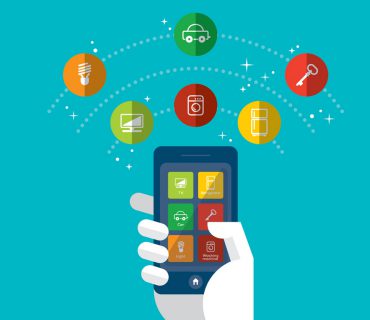
The Matter standard (backed by Apple, Google, Amazon, and Samsung) is finally delivering on the promise of universal IoT interoperability for smart home and commercial building devices. This removes fragmentation barriers and accelerates connected device adoption at scale.
5G-Enabled Massive IoT
5G's ultra-low latency, high bandwidth, and network slicing capabilities unlock use cases impossible on 4G — remote surgery robots, autonomous vehicle coordination, smart stadium experiences, and ultra-dense industrial sensor networks with deterministic real-time response.
Edge-Cloud Continuum
Rather than a binary edge-vs-cloud choice, modern IoT architectures distribute intelligence across a continuum — processing latency-sensitive tasks at the edge, aggregating data at fog nodes, and running complex analytics in the cloud — matching each workload to the right tier.
Sustainable IoT
Energy harvesting sensors, ultra-low-power microcontrollers, and battery-free IoT devices are enabling deployments in environments where cabling is impossible. IoT is also becoming a key tool for sustainability — monitoring emissions, optimising energy grids, and reducing waste in supply chains.